(+035) 527-1710-70
 NEWSLETTER


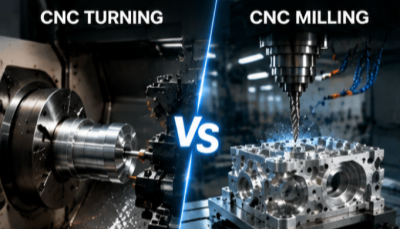
When choosing a CNC machining process for a custom part, one of the most common questions engineers and manufacturers face is: Should I use CNC turning or CNC milling?
Both CNC turning and CNC milling are highly precise machining processes used to manufacture metal and plastic components. However, they use different cutting methods, machine configurations, and are better suited for different part designs.
Understanding the differences between CNC turning and CNC milling can help you select the right manufacturing process, reduce production costs, and achieve better part performance.
In this guide, we will explain how CNC turning and CNC milling work, their advantages, differences, applications, and how to choose the right solution for your project.
What Is CNC Turning?
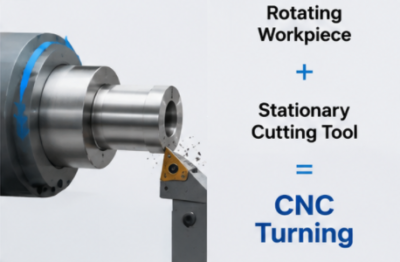
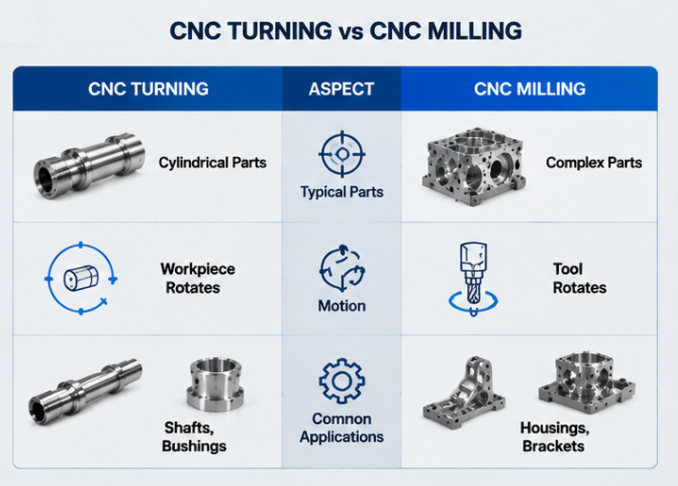
CNC turning is a machining process where the workpiece rotates while a stationary cutting tool removes material.
The part is usually held in a chuck and rotated at high speed. The cutting tool moves along the surface of the rotating material to create the desired shape.
Common CNC turning operations include:
- Facing
- Threading
- Grooving
- Drilling
- Boring
- Taper turning
CNC turning is mainly used for producing cylindrical or round components with high accuracy.
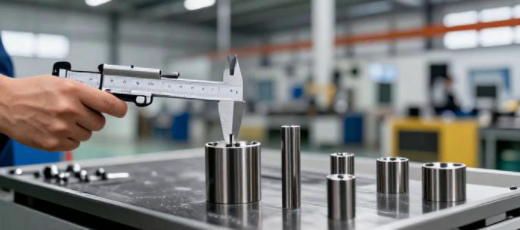
Common CNC Turning Parts
Examples include:
- Shafts
- Bushings
- Pins
- Bolts
- Spacers
- Bearings
- Connectors
What Is CNC Milling?
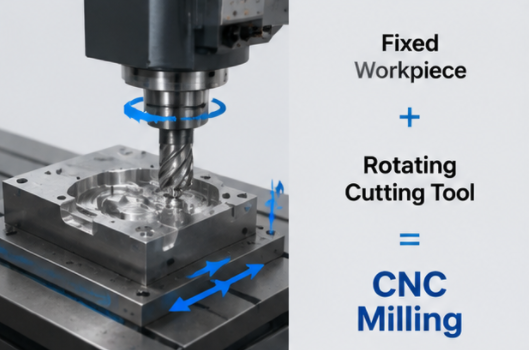
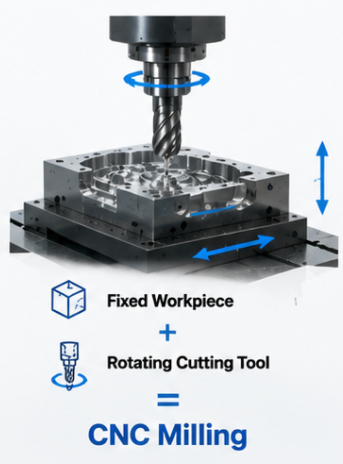
CNC milling is a machining process where rotating cutting tools remove material from a stationary workpiece.
Unlike CNC turning, the workpiece does not rotate. Instead, the cutting tool moves along multiple axes to create complex shapes and features.
Common CNC milling operations include:
- Face milling
- Pocket milling
- Slot cutting
- Drilling
- Contouring
- Thread milling
CNC milling is highly versatile and can manufacture parts with complex geometries.
Common CNC Milling Parts
Examples include:
- Machine housings
- Brackets
- Covers
- Fixtures
- Aerospace components
- Custom mechanical parts
CNC Turning vs CNC Milling: Key Differences
| Feature | CNC Turning | CNC Milling |
|---|---|---|
| Workpiece Movement | Workpiece rotates | Workpiece remains fixed |
| Cutting Tool | Stationary tool | Rotating cutting tool |
| Best For | Cylindrical parts | Complex shapes |
| Main Axis | Usually 2-axis | 3-axis, 4-axis, 5-axis |
| Production Speed | Faster for round parts | Better for complex parts |
| Setup Complexity | Generally simpler | More complex |
| Typical Applications | Shafts, bushings, pins | Housings, brackets, molds |
Difference in Machining Process
CNC Turning Process
The CNC turning process typically follows these steps:
1. Material Preparation
A cylindrical metal bar or plastic stock is placed into the machine chuck.
2. Programming
Engineers create CNC programs based on CAD drawings.
3. Material Removal
The workpiece rotates while cutting tools remove material.
4. Finishing
Additional operations such as polishing, coating, or surface treatment may be applied.
CNC Milling Process
The CNC milling process includes:
1. Workpiece Setup
The raw material is fixed onto the machine table.
2. Tool Selection
Appropriate milling cutters are selected based on the required features.
3. CNC Machining
The cutting tool moves along multiple axes to remove material.
4. Inspection
Finished parts are measured to ensure they meet design specifications.
Advantages of CNC Turning
CNC turning offers several benefits:
1. Excellent for Cylindrical Parts
Turning is the most efficient method for producing round components.
Examples:
- Shafts
- Rods
- Sleeves
- Bushings
2. Faster Production Speed
Because the material rotates continuously, CNC turning can remove material quickly.
This makes it ideal for:
- High-volume production
- Repetitive components
- Cost-effective manufacturing
3. High Dimensional Accuracy
CNC turning can achieve excellent precision for:
- Diameters
- Threads
- Cylindrical surfaces
Advantages of CNC Milling
CNC milling provides greater flexibility for complex designs.
1. Complex Geometries
Milling can create:
- Pockets
- Slots
- Curved surfaces
- Multiple holes
- Complex contours
2. Multi-Axis Machining Capability
Advanced CNC milling machines can use:
- 3-axis machining
- 4-axis machining
- 5-axis machining
This allows manufacturers to produce highly complex components with fewer setups.
3. Wide Material Compatibility
CNC milling can process:
- Aluminum
- Stainless steel
- Titanium
- Brass
- Engineering plastics
CNC Turning vs CNC Milling: Which One Should You Choose?
The best machining process depends on your part design, material, quantity, and performance requirements.
Choose CNC turning when:
✅ Your part has a cylindrical shape
✅ The main features involve diameters and threads
✅ You need fast production of round components
✅ Cost efficiency is important
Examples:
- Shafts
- Pins
- Bushings
- Rotating components
Choose CNC milling when:
✅ Your part has complex geometry
✅ Multiple surfaces require machining
✅ You need pockets, slots, or holes
✅ High design flexibility is required
Examples:
- Brackets
- Housings
- Fixtures
- Custom mechanical components
Can CNC Turning and Milling Be Combined?
Yes.
Many modern CNC machines combine both processes through CNC turning-milling centers.
These machines can:
- Rotate the workpiece like a turning machine
- Use milling tools for additional features
- Complete multiple operations in one setup
Benefits include:
- Reduced production time
- Improved accuracy
- Fewer setups
- Lower manufacturing costs
For complex parts requiring both cylindrical and milled features, a combined machining approach can be the most efficient solution.
How to Reduce CNC Machining Costs
Regardless of whether you choose CNC turning or milling, several design choices can help reduce costs:
- Avoid unnecessary complex features
- Use standard material sizes
- Apply realistic tolerances
- Minimize machining setups
- Choose the right manufacturing process early
Working with an experienced CNC machining partner during the design stage can help optimize both performance and cost.
CNC Turning and Milling Services at KG Precise
At KG Precise, we provide precision CNC machining services for prototypes and low-volume production.
Our capabilities include CNC turning, CNC milling, multi-axis machining, and surface finishing solutions for industries such as automotive, electronics, industrial equipment, and consumer products.
Our engineering team can help you select the most suitable machining process based on your design requirements, material selection, and production goals.
Upload your CAD file and let our engineers provide a professional manufacturing solution for your project.
Conclusion
CNC turning and CNC milling are both essential manufacturing processes, but they serve different purposes.
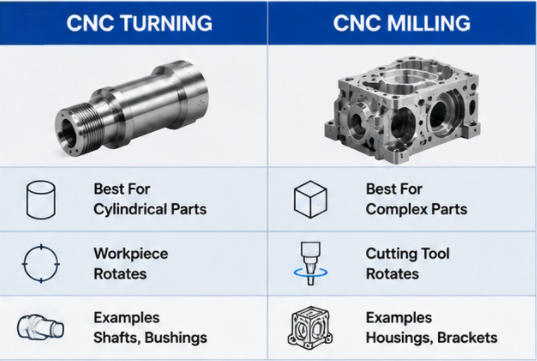
CNC turning is ideal for producing cylindrical components quickly and efficiently, while CNC milling is better suited for complex parts with multiple features and detailed geometries.
Choosing the right process can improve part quality, reduce production costs, and speed up manufacturing.
If you are unsure whether CNC turning or CNC milling is the right choice for your project, our engineering team is ready to help.