 (+035) 527-1710-70
 NEWSLETTER


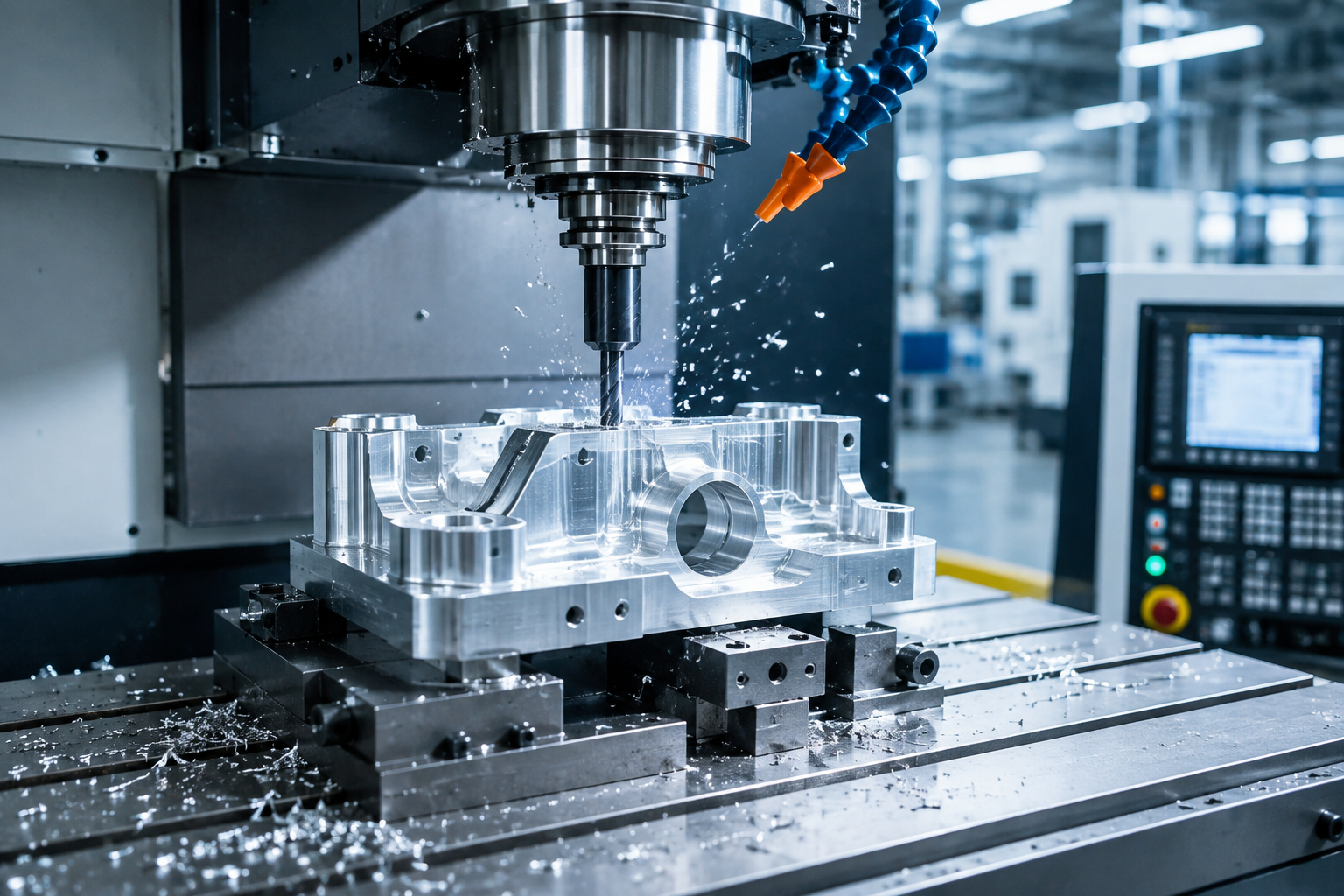
Aluminum is one of the most widely used materials for CNC machining. Its lightweight properties, excellent machinability, corrosion resistance, and good strength-to-weight ratio make it suitable for everything from prototypes and consumer products to aerospace and automotive components.
However, not all aluminum alloys have the same properties. Different grades offer different levels of strength, corrosion resistance, machinability, and cost.
Choosing the right aluminum alloy is therefore an important step in designing and manufacturing CNC machined parts.
In this guide, we’ll explain the most common aluminum grades used for CNC machining, compare their properties and applications, and provide practical tips for selecting the right material for your project.
Why Is Aluminum Popular for CNC Machining?
Aluminum is particularly well suited to CNC machining because it is relatively soft and easy to cut compared with many other metals.
Some of its key advantages include:
- Excellent machinability
- Lightweight
- Good strength-to-weight ratio
- Good corrosion resistance
- Excellent thermal conductivity
- Good electrical conductivity
- Wide range of available alloys
- Suitable for many surface finishes
These properties make aluminum a popular choice for both prototypes and production parts.
Common Aluminum Grades for CNC Machining
Several aluminum alloys are commonly used in CNC manufacturing.
The best choice depends on the required strength, corrosion resistance, appearance, machinability, and application.
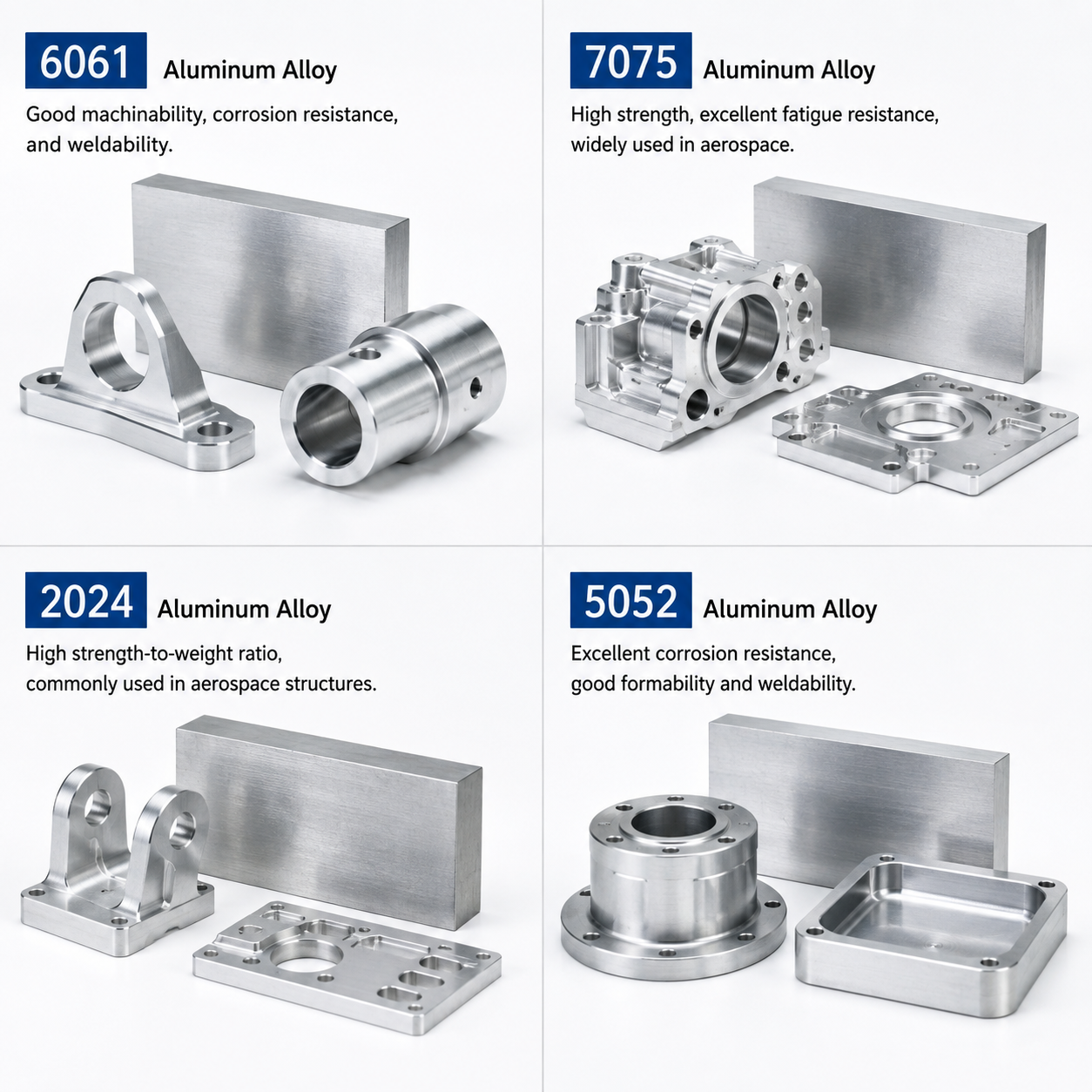
1. Aluminum 6061
6061 aluminum is one of the most commonly used aluminum alloys for CNC machining.
It offers a good balance of strength, machinability, corrosion resistance, and cost.
Advantages
- Good machinability
- Good corrosion resistance
- Good strength
- Relatively affordable
- Easy to anodize
- Widely available
Common Applications
6061 is commonly used for:
- Machine components
- Brackets
- Housings
- Automotive parts
- Robotics components
- Consumer products
- Prototypes
For general-purpose CNC machining, 6061 is often an excellent starting point.
2. Aluminum 7075
7075 aluminum is known for its high strength and is commonly used in applications where strength-to-weight ratio is important.
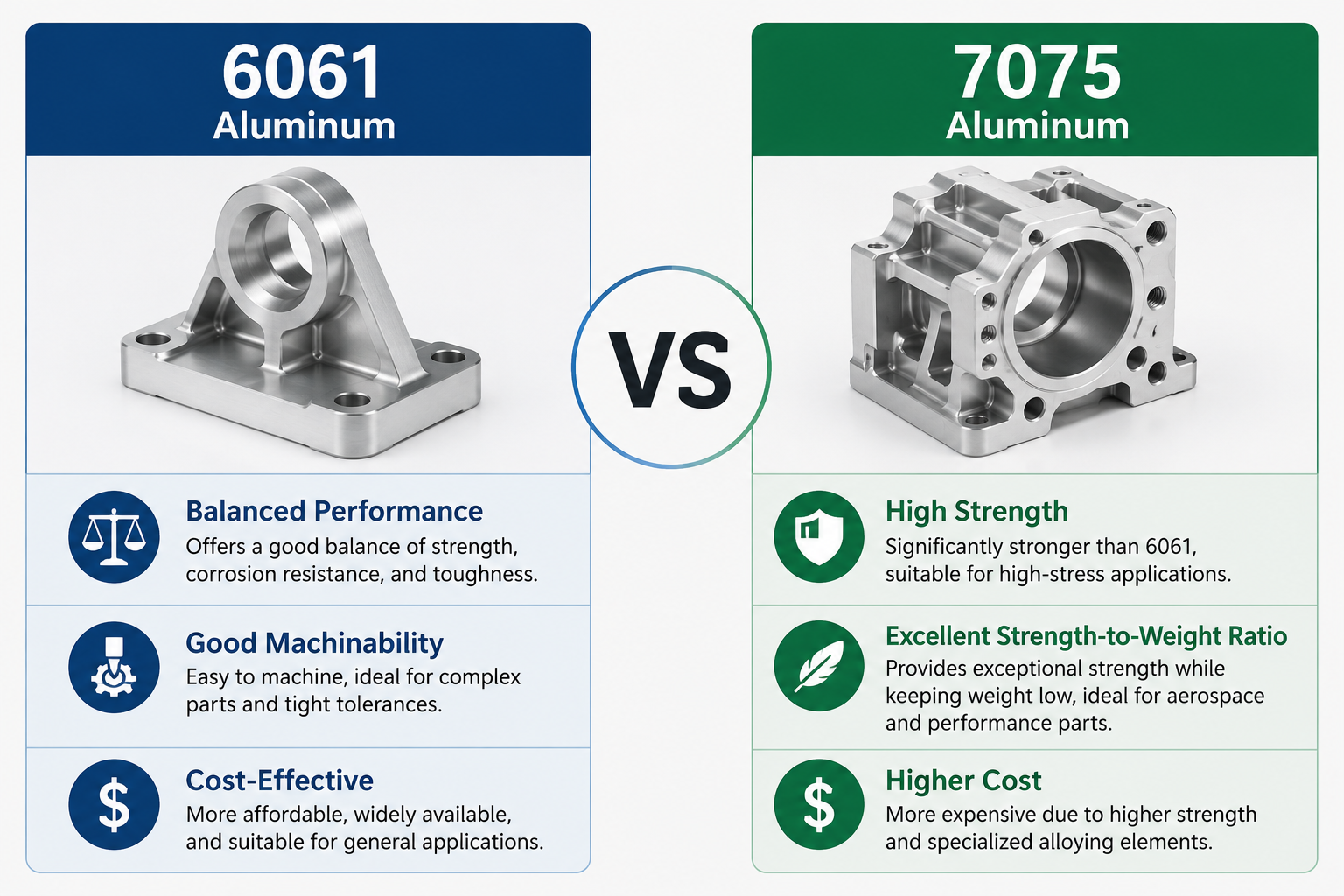
Compared with 6061, 7075 generally provides higher strength but can be more expensive.
Advantages
- Very high strength
- Excellent strength-to-weight ratio
- Good fatigue resistance
- Suitable for demanding applications
Common Applications
- Aerospace components
- Automotive parts
- High-performance equipment
- Robotics
- Structural components
If strength is more important than cost, 7075 may be a better choice than 6061.
3. Aluminum 2024
2024 aluminum is known for its high strength and good fatigue resistance.
It is particularly associated with aerospace applications.
Advantages
- High strength
- Good fatigue resistance
- Lightweight
- Suitable for structural applications
Common Applications
- Aerospace components
- Aircraft structures
- High-strength mechanical parts
However, 2024 generally has lower corrosion resistance than some other aluminum alloys, so additional protection may be required depending on the application.
4. Aluminum 5052
5052 aluminum is known for its excellent corrosion resistance and good formability.
It is commonly used when corrosion resistance is more important than extremely high strength.
Advantages
- Excellent corrosion resistance
- Good formability
- Good weldability
- Lightweight
Common Applications
- Enclosures
- Marine components
- Electronic housings
- Sheet metal parts
- Industrial equipment
Aluminum Grade Comparison
| Aluminum Grade | Strength | Corrosion Resistance | Machinability | Common Applications |
|---|---|---|---|---|
| 6061 | Good | Good | Excellent | General CNC parts |
| 7075 | Very High | Good | Good | Aerospace, high-strength parts |
| 2024 | High | Moderate | Good | Aerospace components |
| 5052 | Moderate | Excellent | Good | Enclosures, marine parts |
The actual properties can vary depending on the material temper and manufacturing condition.
6061 vs 7075 Aluminum: Which Is Better?
6061 and 7075 are two of the most popular aluminum alloys for CNC machining.
The right choice depends on your project requirements.
Choose 6061 when:
- Cost is important
- General-purpose strength is sufficient
- Corrosion resistance is required
- Easy machining is a priority
- Anodizing is required
Choose 7075 when:
- High strength is essential
- Weight needs to be minimized
- The component experiences significant mechanical loads
- Performance is more important than material cost
In simple terms:
6061 = balanced performance and cost
7075 = higher strength and performance
There is no universally “best” aluminum alloy. The best material depends on what the part needs to do.
Advantages of CNC Machining Aluminum
1. Fast Machining
Because aluminum is relatively easy to machine, CNC machines can often achieve high cutting speeds and efficient material removal.
This can help reduce production time.
2. Lightweight Parts
Aluminum has a much lower density than steel, making it useful for applications where weight reduction is important.
Common industries include:
- Aerospace
- Automotive
- Robotics
- Electronics
- Transportation
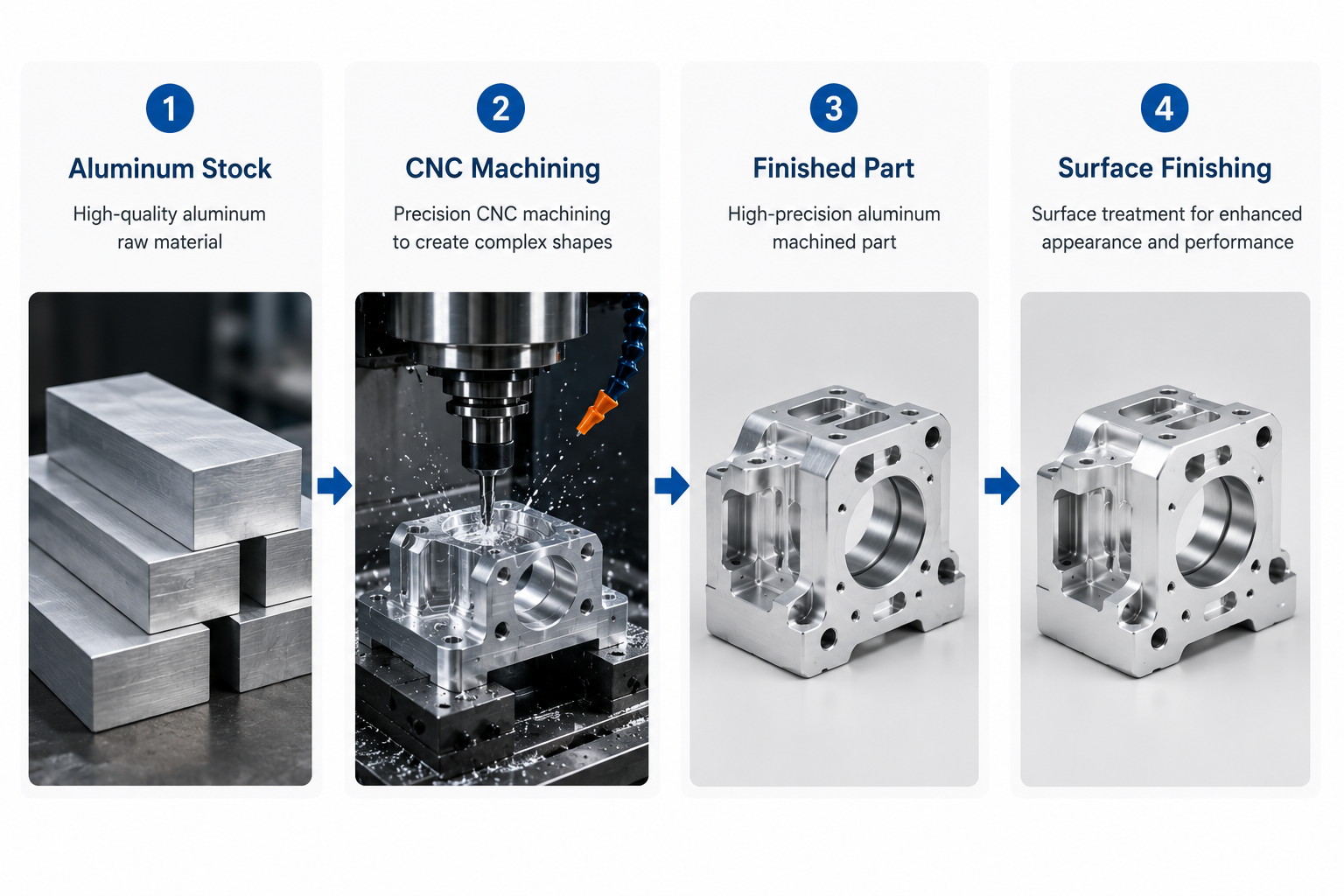
3. Excellent Surface Finishing Options
CNC machined aluminum can be finished using a variety of processes, including:
- Anodizing
- Bead blasting
- Brushing
- Polishing
- Powder coating
Anodizing is particularly popular because it can improve corrosion resistance, surface hardness, and appearance.
What Affects the Cost of CNC Machining Aluminum?
The material itself is only one part of the total manufacturing cost.
Other factors include:
Part Geometry
Complex parts may require more machining time and additional setups.
Tolerances
Tighter tolerances require more precise machining and inspection.
Surface Finish
Additional processes such as anodizing or polishing increase the overall cost.
Production Quantity
Ordering multiple parts can reduce the average cost per component by spreading setup and programming costs across more parts.
Material Grade
Higher-performance alloys such as 7075 may cost more than commonly used grades such as 6061.
How to Design Aluminum Parts for CNC Machining
Following basic design principles can help reduce manufacturing costs.
Use Appropriate Wall Thickness
Very thin walls can be difficult to machine and may be susceptible to vibration or deformation.
Avoid Unnecessarily Deep Pockets
Deep pockets can require long cutting tools and additional machining time.
Use Suitable Internal Radii
Because milling cutters are round, internal corners naturally require a radius.
Larger internal radii can often be machined more efficiently.
Specify Realistic Tolerances
Avoid applying tight tolerances to every dimension.
Only critical features should require precision tolerances.
Minimize Machining Setups
Designing parts that can be machined efficiently with fewer setups can reduce both production time and cost.
Aluminum CNC Machining Applications
Aluminum CNC machining is used across many industries.
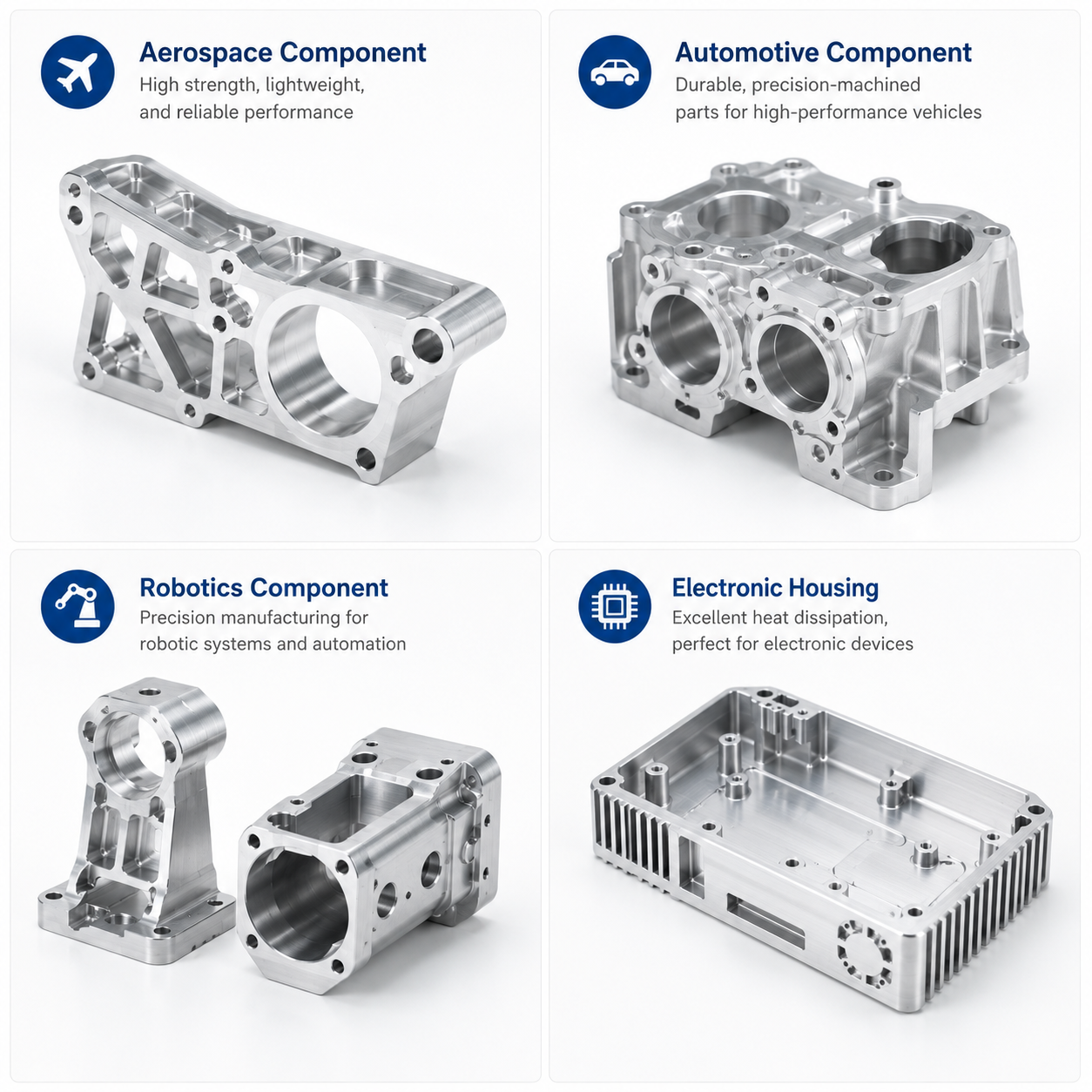
Aerospace
Aluminum components are widely used where low weight and good strength are important.
Automotive
Applications include:
- Brackets
- Housings
- Engine components
- Custom prototypes
Robotics
Aluminum is commonly used for:
- Robot frames
- Mounting brackets
- Motor housings
- Structural components
Electronics
Its lightweight properties and thermal conductivity make aluminum suitable for:
- Heat sinks
- Enclosures
- Mounting components
- Electronic housings
Consumer Products
CNC machined aluminum is frequently used for premium product housings, accessories, and functional prototypes.
Aluminum CNC Machining vs. Steel
When deciding between aluminum and steel, consider the application.
| Property | Aluminum | Steel |
| Weight | Low | Higher |
| Machinability | Excellent | Good to Moderate |
| Strength | Good to Very High | High |
| Corrosion Resistance | Good | Depends on grade |
| Thermal Conductivity | High | Lower |
| Typical Cost | Moderate | Low to High |
Aluminum is often preferred when weight reduction and machinability are important.
Steel may be a better choice when maximum strength, hardness, or wear resistance is required.
How to Choose the Right Aluminum Grade
Before selecting an alloy, consider these questions:
1. How much strength does the part require?
For highly loaded components, 7075 or another high-strength alloy may be appropriate.
2. Is corrosion resistance important?
For outdoor or marine applications, corrosion resistance should be considered carefully.
3. Is the part mainly functional or cosmetic?
If appearance is important, consider whether the selected alloy is suitable for your desired surface finish.
4. What is your budget?
For general-purpose components, 6061 can often provide an excellent balance between performance and cost.
5. How complex is the part?
For complex CNC designs, machinability can have a significant effect on production cost and lead time.
Aluminum CNC Machining Services at KG Precise
At KG Precise, we provide precision CNC machining for aluminum prototypes and low-volume production parts.
Our capabilities include CNC milling, CNC turning, multi-axis machining, and a range of surface finishing options.
Our engineering team can help you select the appropriate aluminum grade based on your part’s:
- Mechanical requirements
- Operating environment
- Design complexity
- Surface finish
- Production volume
- Budget
Whether you need a single prototype or a larger low-volume production run, we can help you develop a cost-effective manufacturing solution.
Upload your CAD file to get started.
Conclusion
Aluminum is one of the most versatile materials available for CNC machining. Its combination of low weight, good strength, excellent machinability, and corrosion resistance makes it suitable for a wide range of applications.
Among the most common grades, 6061 is a strong all-purpose option, while 7075 is better suited to applications that require higher strength. Other alloys such as 2024 and 5052 can provide advantages for specific applications.
The right aluminum grade ultimately depends on your part’s performance requirements, operating environment, manufacturing process, and budget.
If you’re unsure which aluminum alloy is right for your CNC machined part, our engineering team can help you evaluate your options and select the most suitable material.